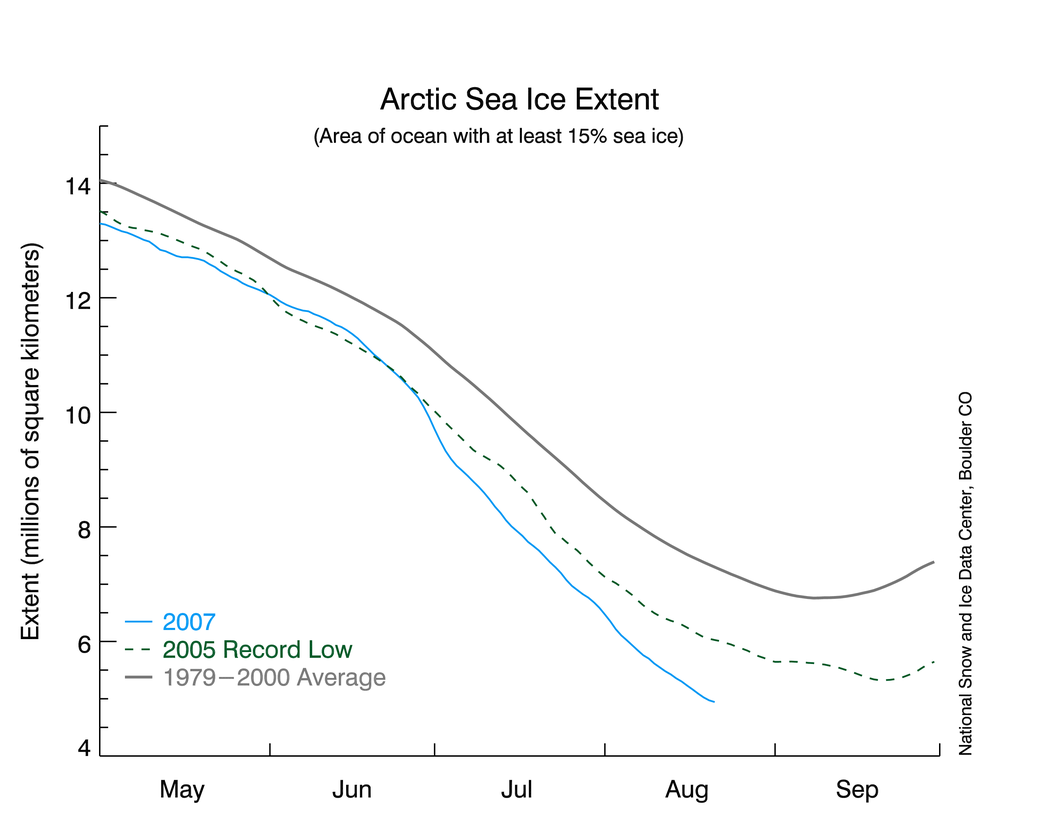
Figure 2: Summer melt season Arctic sea ice extent
Current sea ice conditions in context
Figure 2 is the updated time series of daily sea ice extent for 2007, 2005, and the 1979 to 2000 average. As mentioned above, sea ice extent on August 21 was 4.92 million square kilometers (1.89 million square miles). Compared to conditions cited in our August 17 update, we have lost an additional 340,000 square kilometers (131,000 square miles) of ice, an area larger than the the state of New Mexico. Ice extent is now well below the previous lowest absolute minimum extent of 5.32 million square kilometers (2.05 million square miles) recorded on September 20–21 of 2005, and there is likely several weeks of further melt ahead of us.
Changes in ice age and thickness
Another aspect of the story for 2007 is the "memory" of the sea ice to changes over the past few decades. Specifically, there seems to have been a transition to younger, thinner ice beginning in the late 1970s. This reflects not only trends towards more summer melt and less winter ice growth, but changing winds that have transported fairly thick ice out of the Arctic Ocean into the North Atlantic, and decreased the length of time that ice is "sequestered" in the Arctic Ocean where it might have a chance to grow thicker.
Ice that has survived through one summer, called second-year ice, is typically thicker than first-year ice, and ice that has survived several summers is assumed to be thicker than second-year ice. To estimate ice age, our colleagues Chuck Fowler and Jim Maslanik at the University of Colorado used drifting buoy data along with information from satellites to assess the formation, transport, and melt of the ice, which they in turn used to estimate ice age. Results from this study reveal the area of oldest ice (i.e., ice older than four years) is decreasing in the Arctic Ocean, and being replaced by younger, and therefore, thinner ice. The region of the oldest (and thus thickest) ice is now confined to a relatively small area north of the Canadian Archipelago. Replenishment of old, thick ice is essential to the maintenance and stability of the Arctic summer ice cover, since thinner ice requires less energy to completely melt out in summer than thicker ice.
Figure 4 shows an animation of ice age in the Arctic from 1981 through 2007. The colors indicate the age of the sea ice in years; light blue is open water (OW). Areas in red are locations where the ice is five years or older, whereas the dark blue areas are first-year ice. The overall reduction in ice age over the past twenty-six years becomes evident as the animation runs through the years. The animation also shows seasonal variations in the ice cover as the first-year ice melts in the summer and regrows in the winter.
Figure 4: Disappearance of old ice, 1982–2007

bron:
Current sea ice conditions in context
Figure 2 is the updated time series of daily sea ice extent for 2007, 2005, and the 1979 to 2000 average. As mentioned above, sea ice extent on August 21 was 4.92 million square kilometers (1.89 million square miles). Compared to conditions cited in our August 17 update, we have lost an additional 340,000 square kilometers (131,000 square miles) of ice, an area larger than the the state of New Mexico. Ice extent is now well below the previous lowest absolute minimum extent of 5.32 million square kilometers (2.05 million square miles) recorded on September 20–21 of 2005, and there is likely several weeks of further melt ahead of us.
Changes in ice age and thickness
Another aspect of the story for 2007 is the "memory" of the sea ice to changes over the past few decades. Specifically, there seems to have been a transition to younger, thinner ice beginning in the late 1970s. This reflects not only trends towards more summer melt and less winter ice growth, but changing winds that have transported fairly thick ice out of the Arctic Ocean into the North Atlantic, and decreased the length of time that ice is "sequestered" in the Arctic Ocean where it might have a chance to grow thicker.
Ice that has survived through one summer, called second-year ice, is typically thicker than first-year ice, and ice that has survived several summers is assumed to be thicker than second-year ice. To estimate ice age, our colleagues Chuck Fowler and Jim Maslanik at the University of Colorado used drifting buoy data along with information from satellites to assess the formation, transport, and melt of the ice, which they in turn used to estimate ice age. Results from this study reveal the area of oldest ice (i.e., ice older than four years) is decreasing in the Arctic Ocean, and being replaced by younger, and therefore, thinner ice. The region of the oldest (and thus thickest) ice is now confined to a relatively small area north of the Canadian Archipelago. Replenishment of old, thick ice is essential to the maintenance and stability of the Arctic summer ice cover, since thinner ice requires less energy to completely melt out in summer than thicker ice.
Figure 4 shows an animation of ice age in the Arctic from 1981 through 2007. The colors indicate the age of the sea ice in years; light blue is open water (OW). Areas in red are locations where the ice is five years or older, whereas the dark blue areas are first-year ice. The overall reduction in ice age over the past twenty-six years becomes evident as the animation runs through the years. The animation also shows seasonal variations in the ice cover as the first-year ice melts in the summer and regrows in the winter.
Figure 4: Disappearance of old ice, 1982–2007
bron: