The tropospheric vortex profile is being very much dictated by the stratospheric displacing vortex. Even if we don't get a full MMW the displacement being seen will still have some effect on the troposphere.
Remember the MMW last year. I think that I classified 2 effects felt here at ground level. We initially had a primary effect from the split, followed by a later secondary effect by the vortex collapse. The primary effect was responsible for the February snow and the secondary effect was responsible for dramatically reducing the strength of the jet steam ( no blocking as was expected due to La Nina conditions).
This year any primary effect, that happens with very little delay and is associated with the positioning of the vortex, will be responsible for displacing the vortex towards eastern Siberia. This opens the door for an easterly and whether that actually occurs remains to be seen. This primary effect is likely to be seen whether or not a full MMW takes place or not. Any secondary effect which occurs at a later timeframe up to 6 weeks later will need to be monitored. Theoretically it is in this period that if the vortex has collapsed that there is an increased risk of northern blocking.
Gevonden op netweather
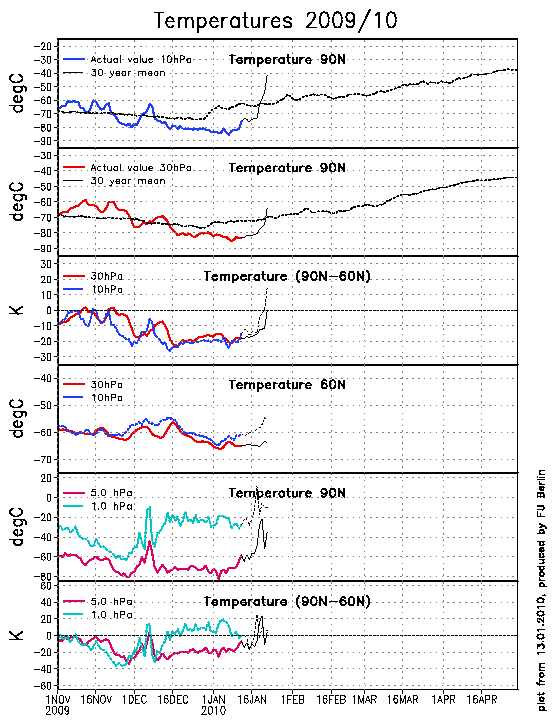
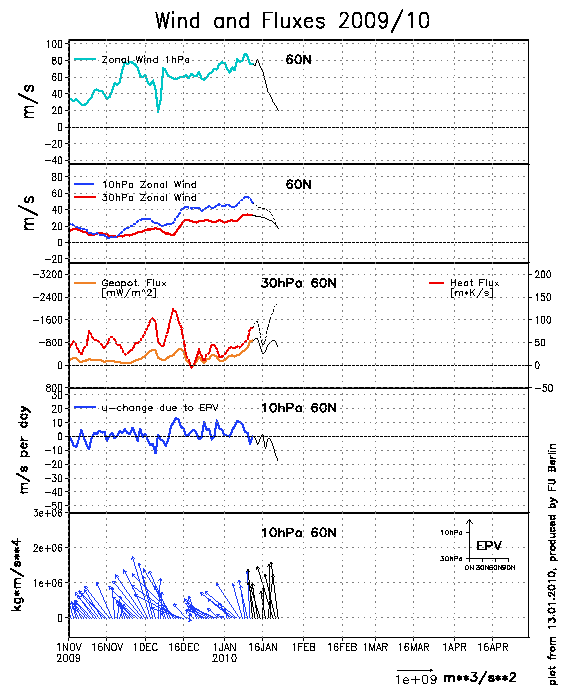
Remember the MMW last year. I think that I classified 2 effects felt here at ground level. We initially had a primary effect from the split, followed by a later secondary effect by the vortex collapse. The primary effect was responsible for the February snow and the secondary effect was responsible for dramatically reducing the strength of the jet steam ( no blocking as was expected due to La Nina conditions).
This year any primary effect, that happens with very little delay and is associated with the positioning of the vortex, will be responsible for displacing the vortex towards eastern Siberia. This opens the door for an easterly and whether that actually occurs remains to be seen. This primary effect is likely to be seen whether or not a full MMW takes place or not. Any secondary effect which occurs at a later timeframe up to 6 weeks later will need to be monitored. Theoretically it is in this period that if the vortex has collapsed that there is an increased risk of northern blocking.
Gevonden op netweather
Bericht laatst bijgewerkt: 13-01-2010 13:17
„Et nul ne se connait tant qu'il n'a pas souffert, „C'est une dure loi, mais une loi suprème, „Vieille comme le monde et la fatalité, „Qu'l nous faut du malheur regevoir le baptéme, ~Et qu'a ce triste prix tout doit étre acheté. „Les moissons pour murir out besoin de rosée, „Pour vivre et pour sentir l'homme a besoin de pleura, „La joie a pour symbole une plante brisée, „Humide encore de pluie et couverte de fleurs."