Dag Weerliefhebbers!
So far, so bad &
& 
Het is echt hopeloos voor de winterliefhebber, stormen wil het trouwens ook niet echt en afgezien van de langdurig extreem hoge temperaturen is het maar al te saai, toch? Gaat er iets veranderen? Al eerder gaf ik aan dat ik de winter weinig kans gaf tot eind december (zie bericht op 11 november) en helaas is dat uitgekomen. Anderzijds stemt het wel tot enige vreugde om steeds meer inzicht te krijgen in de atmosfeer. Dat voelt goed. Hoe gaat het nu verder?
Gisteren heeft Judah Cohen een update geschreven voor zijn blog. https://www.aer.com/science-research/climate-weather/arctic-oscillation
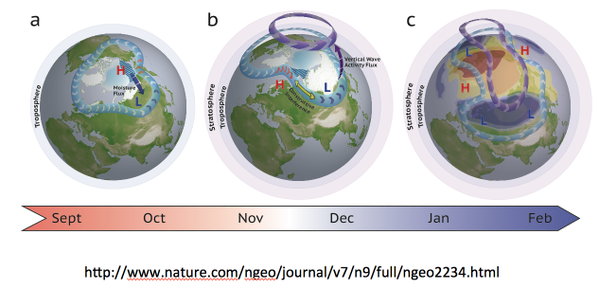
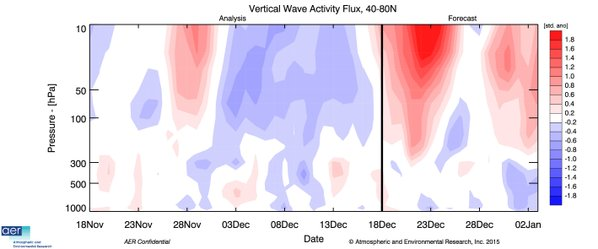
Volgens hem is het een kwestie niet van of maar van wanneer de stratosferische poolwervel gaat verzwakken. Momenteel is er een forse transitie van warmte van de troposfeer naar de stratosfeer, de zgn WAFz. Ik ben nog wat terughoudender, de westelijke QBO beukt er op los, de stratosfeer zeer koud, de zonale snelheid op recordvaart, dus er moet heel wat gebeuren. Langzamerhand krijg ik er wel een wat beter gevoel bij, maar de twijfel overheerst.
Longer term we continue to expect that variability in the polar vortex to strongly influence NH weather patterns. It is becoming less of a question if the polar vortex weakens and more of a question of when. A robust transfer of energy from the troposphere to the stratosphere is underway and will continue the entire week. However with the polar vortex at or near record strength, much of the energy is currently being deflected. Still enough energy is absorbed to stretch the polar vortex so as to increase cross-polar flow from Siberia into eastern North America and commence a cooling trend. The models are now predicting a second pulse of energy the first week of January. This is likely to perturb the polar vortex even further. And we anticipate further pulses of energy. The predicted circulation pattern of ridging in the Barents-Kara Seas/Northwest Eurasia and troughing in East Asia/the North Pacific is optimal for exciting energy pulses from the troposphere to be absorbed into the stratospheric polar vortex. Therefore we continue to anticipate even more pulses of energy transfer into mid-January. The duration and the strength of this energy transfer will strongly influence the variability of the polar vortex. We continue to anticipate that the polar vortex will be sufficiently perturbed/weakened to allow colder weather to spread over the Northern Hemisphere mid-latitudes starting in January. Still, If the energy transfer is not sufficiently strong over the next month or so to weaken the polar vortex, then the winter AO is likely to average positive in the mean and a mild weather pattern will dominate the mid-latitude continents for the remainder of the winter.
So far, so bad
& Het is echt hopeloos voor de winterliefhebber, stormen wil het trouwens ook niet echt en afgezien van de langdurig extreem hoge temperaturen is het maar al te saai, toch? Gaat er iets veranderen? Al eerder gaf ik aan dat ik de winter weinig kans gaf tot eind december (zie bericht op 11 november) en helaas is dat uitgekomen. Anderzijds stemt het wel tot enige vreugde om steeds meer inzicht te krijgen in de atmosfeer. Dat voelt goed. Hoe gaat het nu verder?
Gisteren heeft Judah Cohen een update geschreven voor zijn blog. https://www.aer.com/science-research/climate-weather/arctic-oscillation
Volgens hem is het een kwestie niet van of maar van wanneer de stratosferische poolwervel gaat verzwakken. Momenteel is er een forse transitie van warmte van de troposfeer naar de stratosfeer, de zgn WAFz. Ik ben nog wat terughoudender, de westelijke QBO beukt er op los, de stratosfeer zeer koud, de zonale snelheid op recordvaart, dus er moet heel wat gebeuren. Langzamerhand krijg ik er wel een wat beter gevoel bij, maar de twijfel overheerst.
Longer term we continue to expect that variability in the polar vortex to strongly influence NH weather patterns. It is becoming less of a question if the polar vortex weakens and more of a question of when. A robust transfer of energy from the troposphere to the stratosphere is underway and will continue the entire week. However with the polar vortex at or near record strength, much of the energy is currently being deflected. Still enough energy is absorbed to stretch the polar vortex so as to increase cross-polar flow from Siberia into eastern North America and commence a cooling trend. The models are now predicting a second pulse of energy the first week of January. This is likely to perturb the polar vortex even further. And we anticipate further pulses of energy. The predicted circulation pattern of ridging in the Barents-Kara Seas/Northwest Eurasia and troughing in East Asia/the North Pacific is optimal for exciting energy pulses from the troposphere to be absorbed into the stratospheric polar vortex. Therefore we continue to anticipate even more pulses of energy transfer into mid-January. The duration and the strength of this energy transfer will strongly influence the variability of the polar vortex. We continue to anticipate that the polar vortex will be sufficiently perturbed/weakened to allow colder weather to spread over the Northern Hemisphere mid-latitudes starting in January. Still, If the energy transfer is not sufficiently strong over the next month or so to weaken the polar vortex, then the winter AO is likely to average positive in the mean and a mild weather pattern will dominate the mid-latitude continents for the remainder of the winter.
„Et nul ne se connait tant qu'il n'a pas souffert, „C'est une dure loi, mais une loi suprème, „Vieille comme le monde et la fatalité, „Qu'l nous faut du malheur regevoir le baptéme, ~Et qu'a ce triste prix tout doit étre acheté. „Les moissons pour murir out besoin de rosée, „Pour vivre et pour sentir l'homme a besoin de pleura, „La joie a pour symbole une plante brisée, „Humide encore de pluie et couverte de fleurs."