Nog wat uitsnedes van plaatjes van de MODIS TERRA satelliet
Bericht van: Saskia (Wageningen) , 21-04-2006 17:51
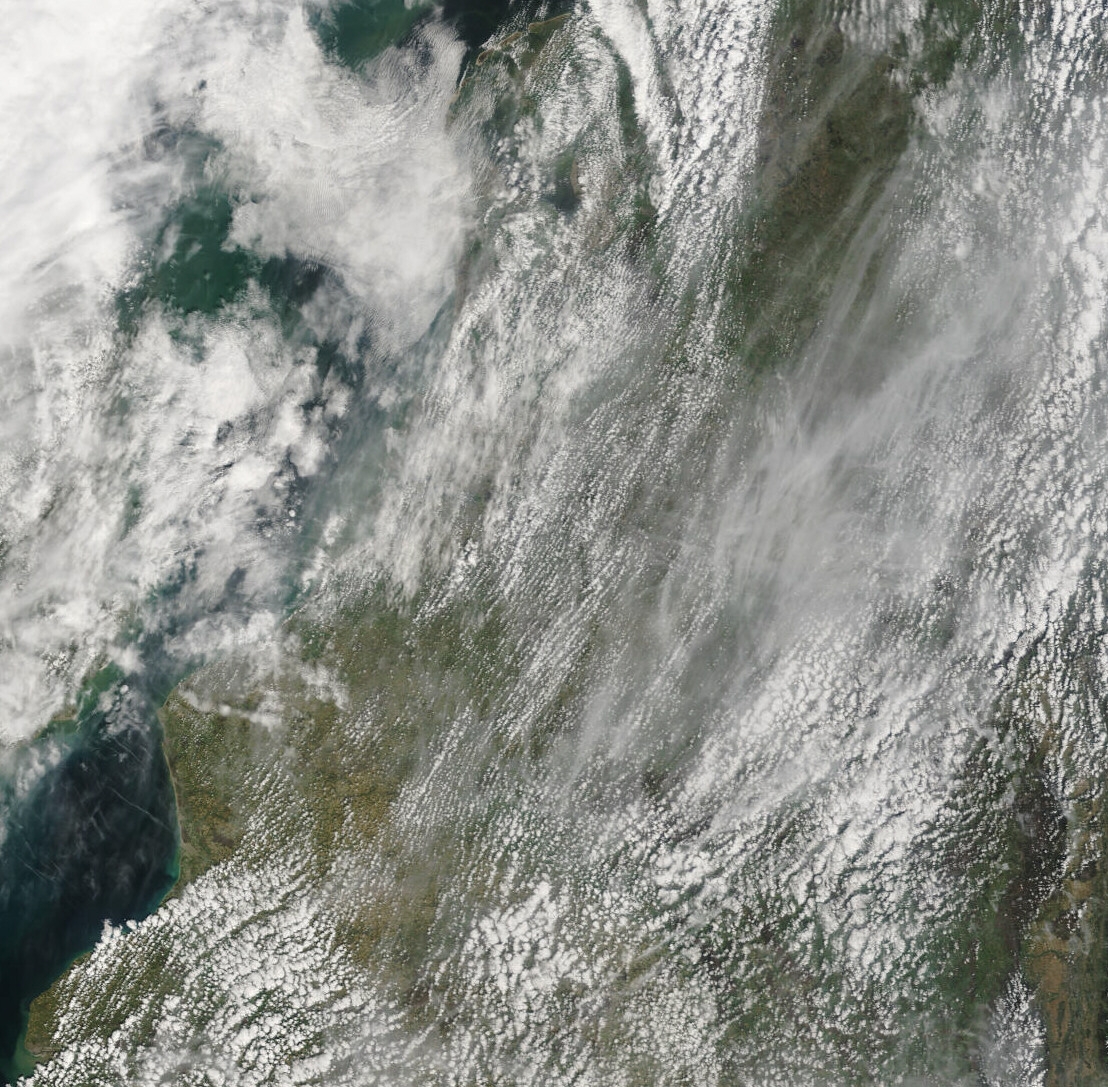
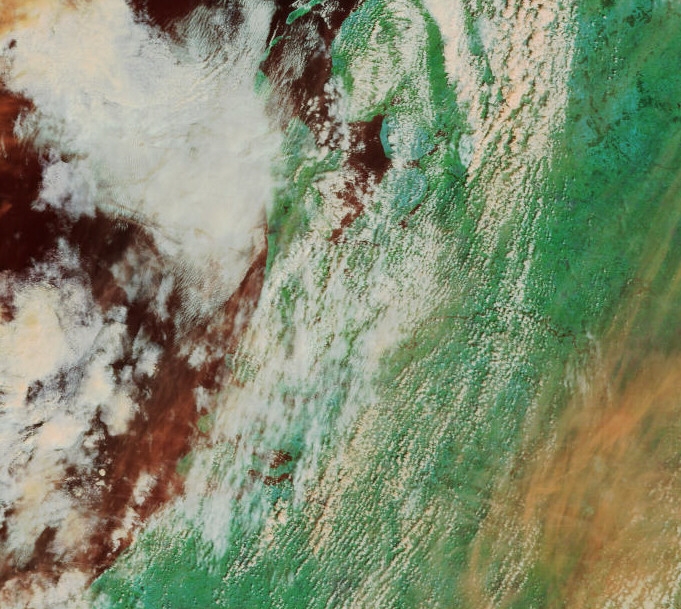
Plaatjes allemaal uit het beeld van 19/05/2006 10:55 UTC gehaald. Resolutie van de uitsnedes is 500m.
Mooie wolkenstraten boven de Lage Landen en N-Frankrijk:
En een RGB-composiet van de kanalen 3,6,7:
Uitleg van hoe het werkt en wat je ziet:
Bron: http://rapidfire.sci.gsfc.nasa.gov/faq
Je kunt er oa dus wolken met alleen waterdruppeltjes (wit) en wolken met ijsdeeltjes (roze/roog, oranje) onderscheiden.
Veelal lage bewolking op de foto, alleen rechtonderin wat cirrus.
Mooie wolkenstraten boven de Lage Landen en N-Frankrijk:
En een RGB-composiet van de kanalen 3,6,7:
Uitleg van hoe het werkt en wat je ziet:
Band 3,6,7 Combination
Long Answer
The 3-6-7 composite assigns Bands 3, 6, and 7 to the red, green, and blue components of a digital image. This combination is good for revealing snow and ice because they are very reflective in the visible part of the spectrum, and very absorbent in Bands 6 and 7, which are a part of the spectrum called the short-wave infrared, or SWIR.
Snow and Ice
Since the only visible light used in these images (Band 3) is assigned to red, snow and ice appear bright red. The more ice, the stronger the absorption in the SWIR bands, and the more red the color. Thick ice and snow appear vivid red (or red-orange), while small ice crystals in high-level clouds will appear reddish-orange or peach.
Vegetation
Vegetation is absorbent in Band 3 and Band 7, but reflective in Band 6, and so will appear greenish in this band combination. Bare soil will appear bright cyan in the image since it much more reflective in Band 6 and Band 7 than Band 3.
Water
Liquid water on the ground will be very dark since it absorbs in the red and the SWIR, but small liquid water drops in clouds scatter light equally in both the visible and the SWIR, and will therefore appear white. Sediments in water appear dark red.
Short Answer
Bands
3,6,7 (479 nm: 1,652 nm: 2,155 nm)
Colors
Vegetation=Green
Ice or snow=Red
Liquid water on the ground=Black or dark red
Liquid water clouds=White
Ice clouds=Peach
Desert=Light blue-green
Advantages
Distinguishing liquid water from frozen water, for example, clouds over snow, ice cloud versus water cloud; or floods from dense vegetation.
Bron: http://rapidfire.sci.gsfc.nasa.gov/faq
Je kunt er oa dus wolken met alleen waterdruppeltjes (wit) en wolken met ijsdeeltjes (roze/roog, oranje) onderscheiden.
Veelal lage bewolking op de foto, alleen rechtonderin wat cirrus.
Bericht laatst bijgewerkt: 21-04-2006 17:52
Uitleg Wetterzentrale-kaarten (klikbaar  )
)
)